
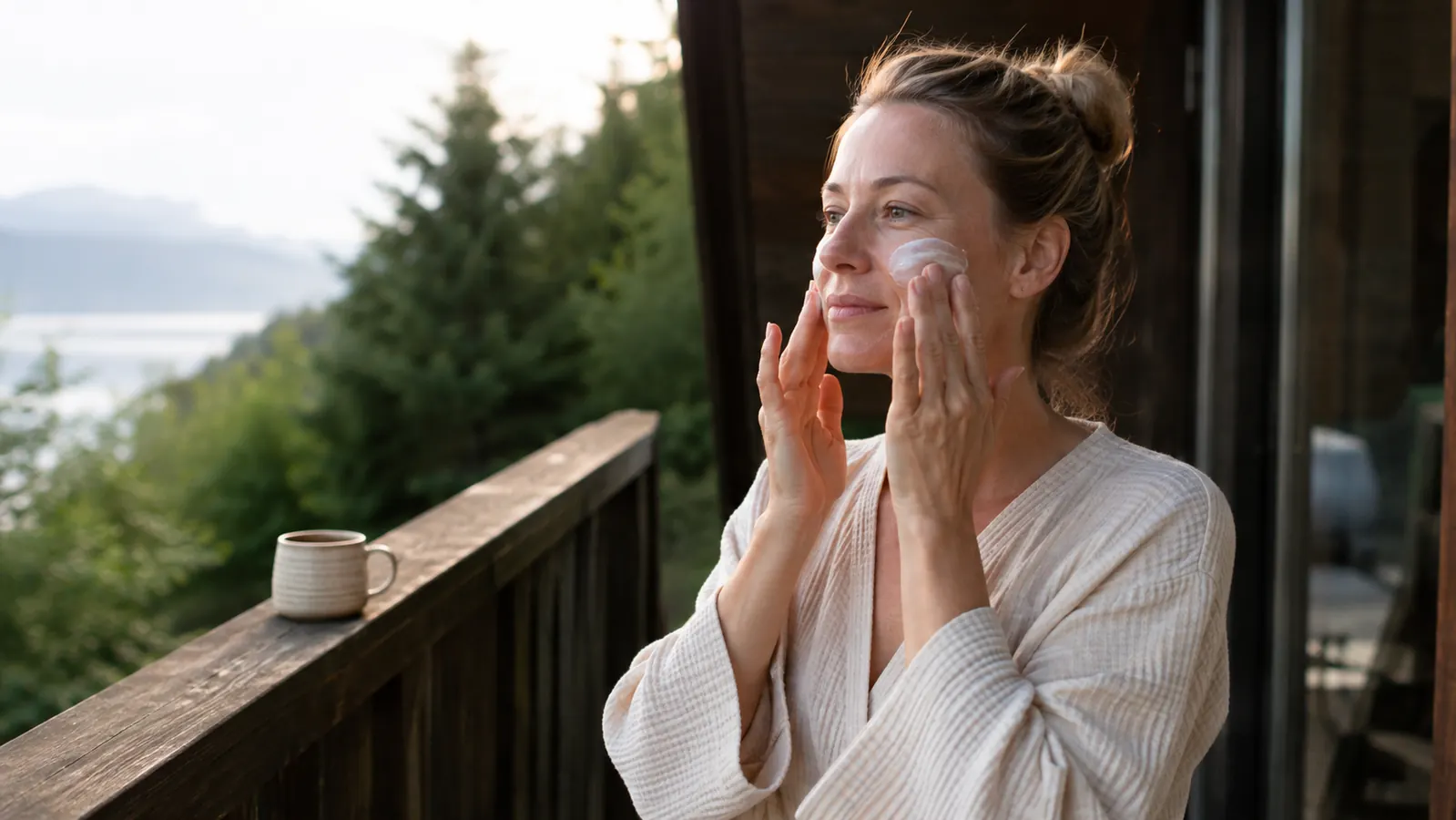
I used to treat sunscreen like a summer-only, beach-day-only thing. Then my dermatologist pointed a dermatoscope at a spot near my hairline that I'd been ignoring for two years and told me, flatly, that most of the damage on my face happened on completely unremarkable Tuesdays. Driving to work. Walking the dog. Standing at the mailbox. That conversation is the whole reason I now wear La Roche-Posay Anthelios every single morning, rain or shine, January or July.
This isn't a routine that requires a ten-step regimen or an hour in front of the mirror. It's five steps, most mornings under five minutes, and it's built specifically for skin that reacts to fragrance, alcohol, and the heavier chemical sunscreens that make some faces sting or break out. If your skin is on the sensitive or reactive side, and you want a routine that actually decreases your risk of sunburn and early skin aging when you use it consistently and pair it with other sun protection habits, this is the order I follow.
The sunscreen that doesn't feel like a chore to reapply
Most mineral sunscreens I tried before this one left a gray cast or pilled under moisturizer. The La Roche-Posay tinted fluid formula blends in and layers clean, which is the entire reason I've actually kept it on my counter for two years instead of one bottle deep in a drawer.
Amazon Check Today's Price on Amazon →Step 1: Start with a clean, completely dry face
Sunscreen goes on last for a reason, but the step before it matters more than people think. I cleanse first, pat my face dry with a soft towel, and wait a full two or three minutes before touching any product. Applying sunscreen to damp skin dilutes it and makes it slide around instead of forming an even film.
If I'm using a vitamin C serum or a light moisturizer that morning, that goes on during this window, while my skin is still cool from washing. I let each layer sink in for about a minute before adding the next one. Rushing this step is how you end up with pilling later, those little gray rolled-up bits of product that show up mid-morning and make you look like you haven't slept.
This is also the moment I do a quick visual check of my own skin, forehead, cheeks, nose, the tops of my ears. Nothing dramatic, just a habit I picked up after that dermatoscope appointment. Anyone with a mole that's changing shape, color, or size, or a spot that won't heal, should get it looked at by a dermatologist rather than waiting to see if sunscreen fixes it. Sunscreen protects going forward. It doesn't undo or treat anything that's already there.
Cloudy days trip people up the most here. I used to skip sunscreen entirely on overcast mornings, reasoning I wasn't going to catch any color anyway. A large share of UV rays pass straight through cloud cover, so the routine runs the same on a gray Tuesday as it does on a clear one. The only trigger for skipping this step in my house is not leaving the bed, not the forecast.
Step 2: Apply a full nickel-to-quarter-size amount of mineral sunscreen
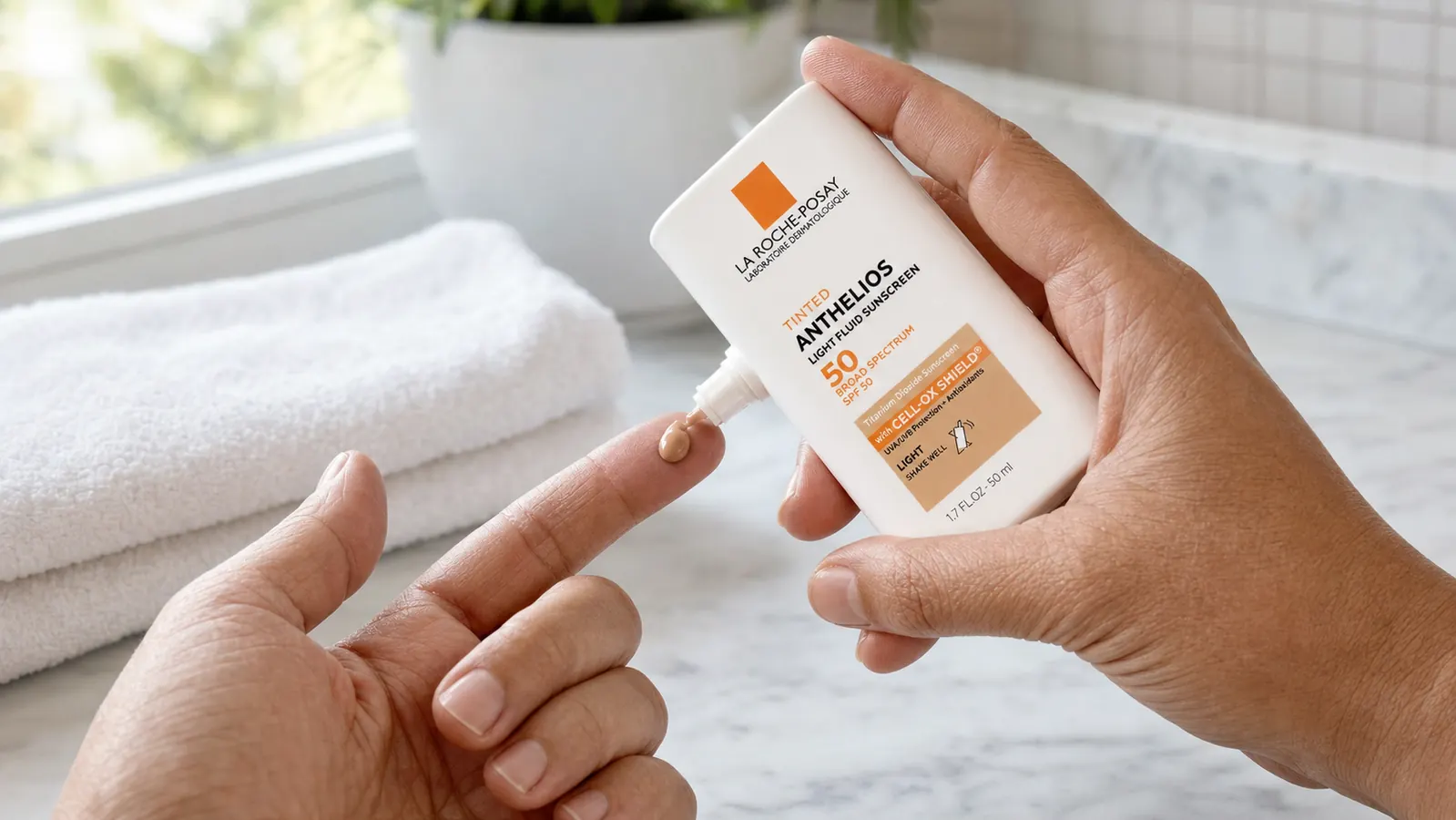
This is the step where I actually reach for La Roche-Posay Anthelios, and it's the only step where I'm recommending a specific product by name, because the amount and the coverage matter more here than anywhere else in the routine. I use roughly a nickel-sized dollop for my face alone, more like a quarter if I'm covering my neck and the tops of my ears too, which I always do now.
The reason this one earned a permanent spot in my routine is simple. It's a mineral formula built around zinc oxide, which tends to be gentler on reactive skin than the chemical filters that used to leave my cheeks blotchy and stinging by mid-morning. The tinted fluid version blends into my skin tone instead of sitting on top of it in a chalky gray layer, and it doesn't pill when I put moisturizer or makeup on afterward. That combination, mineral formula plus a texture I don't dread using, is the whole reason this step of the routine actually happens every day instead of only on vacation.
The label reads SPF 50 and broad spectrum, and both words matter separately. The SPF number reflects UVB protection, the rays mainly responsible for sunburn. Broad spectrum means it also covers UVA, the rays that penetrate deeper and drive much of the fine lines and uneven tone that show up over years, not days. A high SPF number on a product that isn't broad spectrum is only doing half the job, which is why I check both lines on the label, not just the big number.
I warm the La Roche-Posay between my fingertips for a second before pressing it into my skin in sections, forehead, cheeks, nose, chin, then jawline and neck. Rubbing it in hard the way you'd rub in a body lotion actually works against you with mineral formulas, it can thin the layer out unevenly. Press and pat instead.
Step 3: Layer it correctly under makeup or a heavier moisturizer
Order matters here. Sunscreen is the last skincare step and the first makeup step, always. I give it a full two minutes to set before I add anything on top, whether that's a tinted moisturizer, a foundation, or nothing at all on the weekends.
On drier days, especially through winter, I'll add a thin layer of my regular moisturizer underneath the sunscreen instead of on top of it, since that gave me a smoother finish once I started paying attention. On humid summer mornings I skip the extra moisturizer entirely and let the tinted fluid do double duty, since it already has enough slip that my skin doesn't feel stripped.
Eyes and lips get skipped constantly, and both burn. I use a mineral eye cream with its own SPF near my lash line, since the tinted fluid alone can migrate and sting if I get too close, and a lip balm with SPF goes on last of all, after everything else, since it's the one spot on my face that needs reapplying most through the day anyway from talking, eating, and coffee.
If you wear makeup, don't skip a beat here waiting for a mattifying setting powder to fix a greasy feeling. Give the sunscreen its full set time first. Most of the complaints I hear about sunscreen "pilling under makeup" actually trace back to rushing this two-minute wait, not the product itself.

Step 4: Reapply every two hours you're actually outside
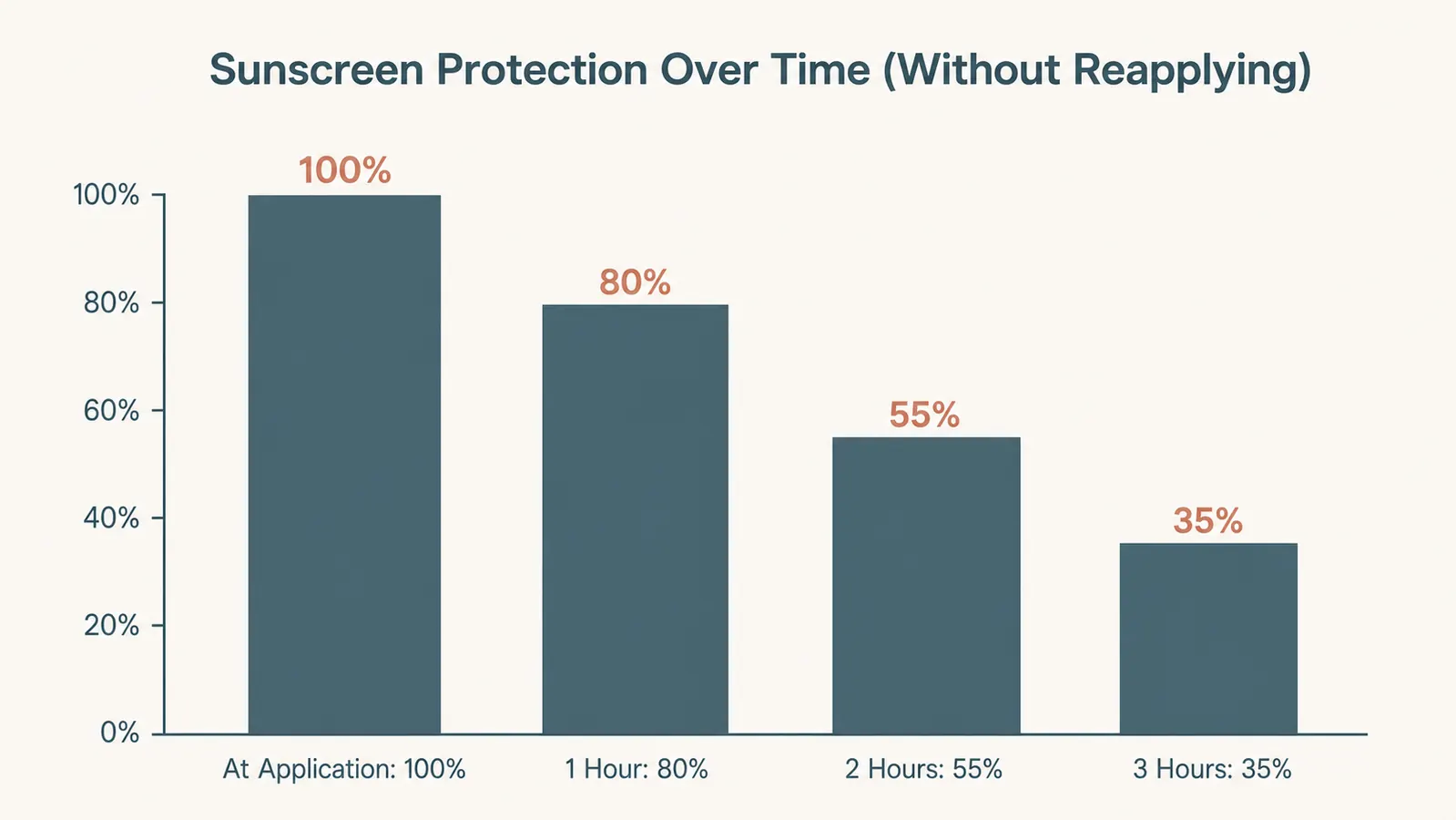
This is the step almost everyone skips, and it's the one that matters most if you're outside for any real stretch of time. A single morning application protects you through breakfast and the commute. It does not protect you through a full afternoon in the yard, a long walk, or a kid's soccer game.
Unprotected sun exposure adds up fast once you're past that first hour or two outdoors, which is exactly why the two-hour reapplication window on every sunscreen label exists, it isn't a marketing suggestion. I keep a travel-size tube in my bag and in the car specifically so reapplying doesn't require a special trip home. For days I know I'll be outside longer, I set a phone alarm, because I genuinely will not remember otherwise.
Sweat and water resistance claims are worth reading closely too. Anthelios is labeled water resistant for a set number of minutes noted right on the bottle, which is a real, tested figure, not a marketing flourish. It means the formula holds up through a swim or a sweaty walk for that window before it needs reapplying, not indefinitely, so I still reset the clock the moment I towel off.
Reapplication over makeup is easier than people assume. A pressed mineral powder sunscreen dabbed on with a brush works without disturbing your foundation, or you can pat a little of the tinted fluid over cheekbones and nose with clean fingertips. Either beats doing nothing, which is what most of us do by default.
Step 5: Cover what you're not thinking about, and build in shade
Ears, the back of the neck, the part in your hair, the tops of your hands on the steering wheel, these are the spots that get the most cumulative sun exposure and the least sunscreen. I make a deliberate pass over all of them every morning, not just my face.
One habit that surprised me when I first heard it: UVA rays pass through most car glass, so the side of my face that gets more window light on my daily commute was noticeably more sun-exposed than the other side before I started wearing sunscreen regardless of whether I was technically 'going outside.' Driving counts as sun exposure. I treat it that way now, sunscreen on before I ever touch the car keys.
Sunscreen is one layer of protection, not the whole system. I've added a wide-brim hat for anything longer than a quick errand, sunglasses with real UV protection rather than just dark lenses, and I try to avoid being outside without shade between roughly 10am and 4pm when the sun is strongest. None of these habits are dramatic. Together with daily sunscreen, using them as directed and consistently is what actually decreases the risk of sunburn and early skin aging over time, and that combination is what dermatologists tend to recommend rather than sunscreen alone.
I also keep a standing dermatologist appointment once a year for a full skin check, and I go sooner if I notice a mole changing shape, color, or size, or a spot that won't heal. If you have a diagnosed skin condition, or anything on your skin that's changed recently, that's a conversation for a dermatologist, not something a sunscreen routine on its own is meant to handle.
What Else Helps
A handful of habits outside the five steps above make a real difference without adding much time to your morning. Sun-protective clothing with a UPF rating covers your arms and shoulders without needing constant reapplication, which is useful on long outdoor days. I've also started checking the UV index on my phone the way I check the weather, since a UV index of 6 or higher is when I'll actually grab the hat instead of leaving it in the closet.
An antioxidant serum with vitamin C in the morning, underneath sunscreen, is something my dermatologist recommended as a complementary step, though it's not a substitute for SPF and I don't treat it as one. If you want the full case for why mineral sunscreen specifically tends to suit reactive skin better than chemical formulas, I laid out the reasoning in 10 Reasons Mineral Sunscreen Protects Sensitive Skin Best, which covers the ingredient side of this in more depth than I can here.
None of this works as a single dramatic effort. It works because it's boring and repeated, the same five minutes most mornings for months and years, not a heroic push before a beach trip. If you're building this habit from scratch, I'd rather you nail steps 1 and 2 every single day than attempt all five perfectly twice a week and burn out on the rest.
The best sunscreen routine isn't the fanciest one. It's the one you'll actually still be doing on an ordinary Tuesday in November.
Ready to build the routine that actually sticks
Two years in, this is still the only sunscreen I don't have to talk myself into using. If your skin flares up with most SPF formulas, this La Roche-Posay mineral fluid is worth putting in your morning lineup.
Amazon Check Today's Price on Amazon →