
If you're standing between two bottles of facial sunscreen wondering whether you really need the pricier one, here's the short version: La Roche-Posay Anthelios 50 Mineral Tinted Ultra Light Fluid is the sunscreen I actually finish the bottle on, and it's the one I hand to any friend who's ever said sunscreen makes their face burn, sting, or turn a strange shade of gray in photos. EltaMD UV Clear has a loyal following for good reason, plenty of dermatologists recommend it, and I understand the appeal. But once you compare the two side by side on what's actually in the formula, how they wear through a full day, and what they do for skin that flushes at the slightest provocation, the difference is more than cosmetic.
I've burned through more sunscreen bottles than I want to admit, chasing something that wouldn't sting my eyes by noon, wouldn't leave a gray film in every selfie, and wouldn't fight with my moisturizer underneath it. Anthelios and EltaMD UV Clear both get pitched as the answer for sensitive, reactive, sun-averse skin. They're not solving that problem the same way, though, and if you've got rosacea, easily flushed cheeks, or a habit of reacting badly to certain UV filters, that difference is worth understanding before you spend the money on either one.
| Anthelios | EltaMD UV Clear | |
|---|---|---|
| Active filters | 100% mineral, titanium dioxide + zinc oxide | Hybrid formula, zinc oxide + octinoxate (a chemical filter) |
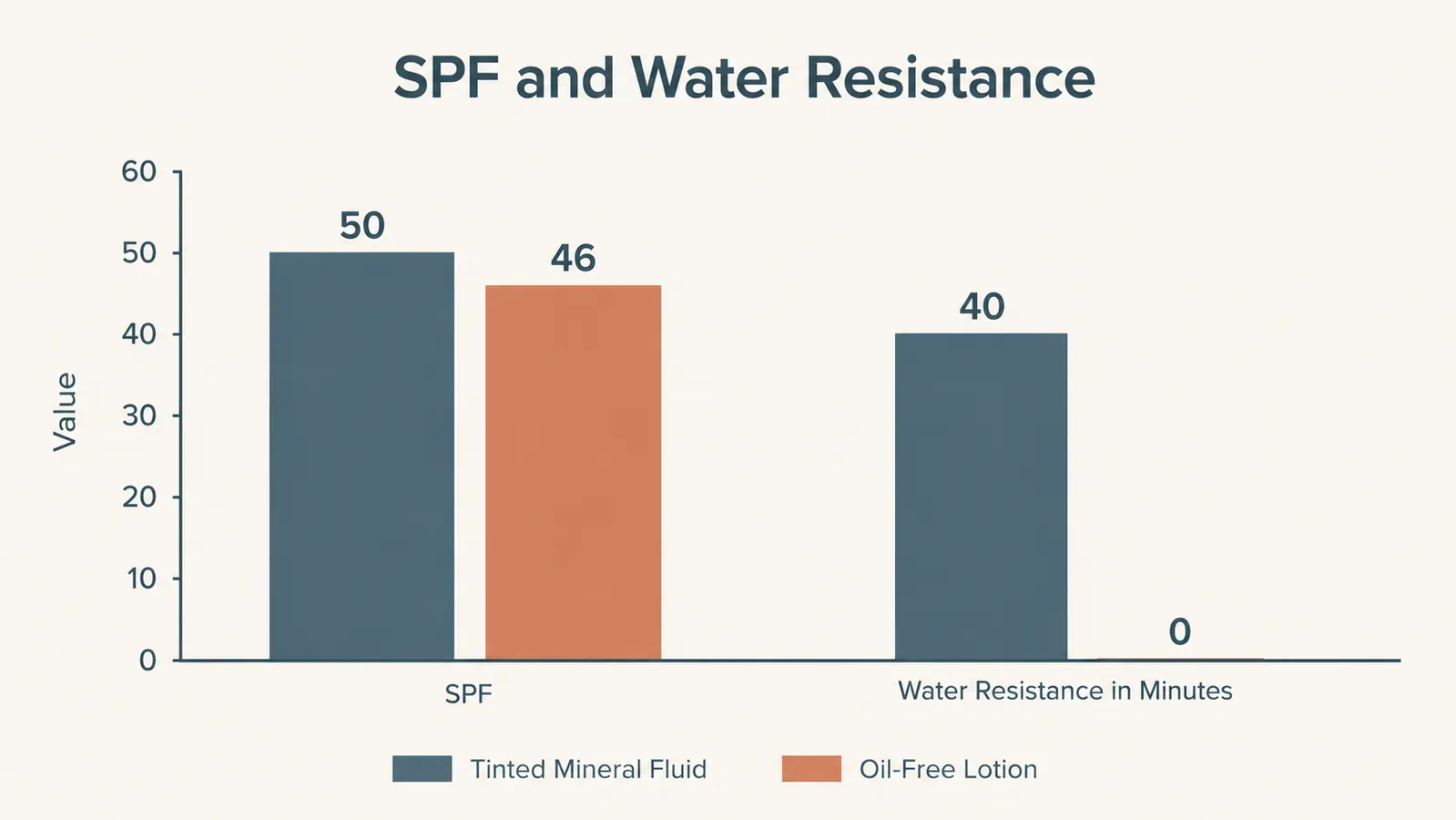
| SPF rating | SPF 50 | SPF 46 |
| Tint | Universal sheer tint, evens redness on contact | No tint, translucent finish |
| Water resistance | Rated water resistant, 40 minutes | Not labeled water resistant, daily wear only |
| Added ingredient | None beyond the core mineral filters, unscented | Niacinamide added for oil control and calming |
| Dispenser | Squeeze tube fluid | Pump bottle lotion |
| Price (1.7 fl oz, today's price) | $39.99 | Typically listed around $41 and up |
How I Compared the Two
I didn't do a rushed two-week side-by-side and call it a comparison, because two weeks doesn't tell you much about a facial sunscreen. I wore EltaMD UV Clear as my daily sunscreen for about three months during a stretch when my skin was fairly calm, reapplying it on long dog walks and testing how it held up under makeup on workdays. Then, through a full summer of pool days, humidity, and actual beach trips, I switched to Anthelios and tracked how it handled sweat, reapplication over tinted moisturizer, and whether it held up once my face started actually sweating instead of just sitting under office air conditioning.
That stretch matters more than a spec sheet, because the real test of a facial sunscreen isn't how it looks in the bottle, it's whether you still want to put it on your face at hour six of a hot day, and whether it survives sweat and a hand towel without needing a full reapplication ritual. Both held up reasonably well, but only one of them didn't leave my under-eye area looking cakey by mid-afternoon.
I also did a simple patch test before committing to either sunscreen for a full season, a dab on the inside of my wrist and another just below my jaw, left on for 48 hours before either one went anywhere near my eyes or my forehead. Neither caused a reaction on my skin specifically, which is exactly why this comparison is really about day-to-day wear and formula philosophy rather than one sunscreen being unsafe and the other being safe. If you're switching away from a sunscreen that's actively bothering you right now, that same 48-hour patch test on your inner arm is worth doing before you commit a whole bottle to your face.
Worth saying plainly, 'sensitive skin' covers a lot of ground. Someone with diagnosed rosacea, someone with reactive but undiagnosed redness, and someone who's just cautious after one bad sunburn are all technically shopping in the same aisle, and they don't all respond identically to the same filters. Treat this as a starting point, and if you've got a diagnosed skin condition, run any new sunscreen past a dermatologist before you build a summer routine around it.
What's Actually in Each Bottle
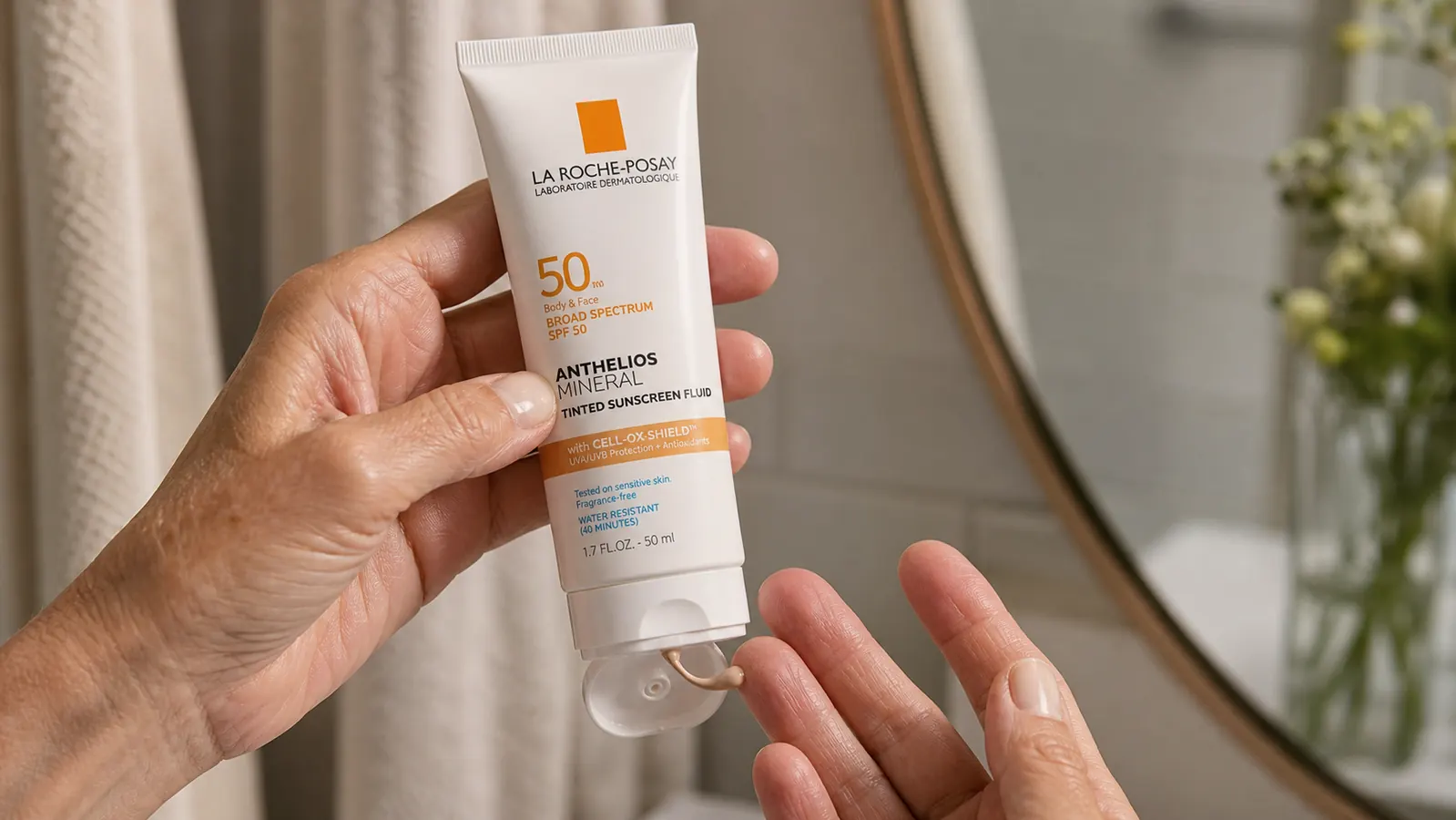
Both products get marketed toward sensitive skin, but that phrase isn't a regulated claim, so the ingredient list is where the real story is. Anthelios Mineral Tinted Ultra Light Fluid uses titanium dioxide and zinc oxide as its only active filters, nothing else doing the sun-blocking work. EltaMD UV Clear pairs zinc oxide with octinoxate, a chemical filter, plus niacinamide added for its calming and oil-balancing properties. Neither approach is wrong, they're just built around different priorities, one minimizes what's touching your skin, the other adds an ingredient specifically to manage oil and irritation.
For most people with mildly sensitive skin, either formula is probably fine day to day. The difference tends to show up at the edges, on the days your skin is already irritated from a new retinoid, a flare, wind, or too much sun the week before. That's when a fully mineral formula with fewer moving parts tends to be the gentler landing spot, since there's simply less in the La Roche-Posay bottle that could be the culprit if something goes wrong.
Both are also broad-spectrum, SPF 15-and-above formulas, which means when used as directed alongside other sun protection measures like shade and a hat, they can help prevent sunburn. That's the extent of what any facial sunscreen, mineral or chemical, is allowed to claim, and it's worth remembering whenever marketing copy on either bottle starts to imply more than sunburn protection and a daily coverage habit actually deliver.
Where Anthelios Wins
The single biggest thing separating Anthelios from EltaMD UV Clear is what's actually doing the sun protection. Anthelios Mineral Tinted Ultra Light Fluid uses titanium dioxide and zinc oxide, full stop, no octinoxate or other chemical filter sitting on top. For skin that flares at fragrance, certain preservatives, or chemical UV filters specifically, that's not a small footnote, it's the whole reason a mineral-only formula gets recommended in the first place. I have a friend whose face used to go blotchy within an hour of any chemical sunscreen, and Anthelios was the first one that didn't do that to her.
Then there's the tint, which sounds like a beauty extra until you've actually worn it. The universal sheer tint doesn't just avoid the chalky gray cast that mineral sunscreens are known for, it evens out the redness a lot of reactive skin deals with daily, so you're not layering a separate color corrector on top just to leave the house looking normal. It also means one less step in the morning, which after enough mornings of doing seven skincare steps before coffee, actually matters. Under makeup it sits flat instead of pilling, and it doesn't leave the greasy sheen by early afternoon that made me stop wearing certain other sunscreens years ago.
Wearing Both Through a Full Day
Where the two really separate is at hour eight, not hour one. Fresh out of the bottle, both sunscreens feel pleasant enough, light, quick to absorb, no obvious white cast if you rub them in well. It's later in the day, after sweat, humidity, a few hours of talking with your hands near your face, and maybe a reapplication over makeup, that the differences show up. EltaMD UV Clear started to feel slightly tacky by early afternoon on hot days, the kind of tacky that made me want to blot rather than reapply. Anthelios stayed matte-adjacent longer, and when I did reapply over the tint, it blended back in instead of sitting on top as a visible extra layer.
Reapplication itself is where the tube versus pump difference actually matters. A pump dispenses a consistent amount every time, which is genuinely convenient, but it also gives you less control if you only need a small top-up on your nose and cheeks rather than a full-face reload. The squeeze tube lets me control exactly how much comes out, which sounds like a minor thing until you're trying to stretch a roughly $40 bottle through an entire summer of daily reapplication without wasting product.
Where EltaMD UV Clear Wins
EltaMD UV Clear earns its reputation honestly, and the ingredient that gets it there is niacinamide, added specifically to calm and help control oil, which is why it shows up so often on lists for acne-prone and oily skin. If your main complaint isn't redness but shine and breakouts, that's a real advantage Anthelios doesn't have. The formula leans on a mix of zinc oxide and octinoxate rather than going fully mineral, which some people prefer because it tends to spread a little thinner and absorb a touch faster on oilier skin types.
The pump bottle is also just more practical day to day than Anthelios's squeeze tube, especially with wet hands first thing in the morning. And because EltaMD UV Clear skips the tint entirely, it's a better blank canvas for anyone who wants to control their own color coverage separately rather than have the La Roche-Posay make that decision for them. It's a genuinely well-built daily sunscreen, and for skin that leans oily rather than reactive, I understand why it's the one dermatologists keep reaching for.
Tired of sunscreen that stings, pills, or leaves you looking gray in photos?
This is the La Roche-Posay tinted mineral fluid I actually reach for every morning from May through September. Check today's price and current rating on Amazon.
Amazon Check Today's Price on Amazon →Who Should Buy Which
If your skin flushes, stings, or breaks out in response to chemical sunscreen filters specifically, or if you deal with rosacea, visible redness, or general reactivity, start with Anthelios. The mineral-only formula and the tint that evens your tone out are built for exactly that skin. If your bigger daily struggle is oil and breakouts rather than redness, and you don't mind a formula that isn't fully mineral, EltaMD UV Clear's niacinamide and thinner texture are worth trying first.
If you're somewhere in between, meaning your T-zone runs oily but your cheeks flush easily, it's a genuinely close call. In that case I'd still lean toward Anthelios, since a mineral-only sunscreen is easier to layer a separate oil-control product on top of than it is to add a soothing or oil-balancing ingredient to a hybrid formula that's already doing its own thing. You can always blot midday with a mattifying sheet if shine is the tradeoff, but you can't easily undo redness that a chemical filter helped trigger.
There's also a simple cost consideration if price per bottle factors into your decision the way it does mine. Anthelios currently runs $39.99 for 1.7 ounces, and EltaMD UV Clear is typically priced a bit higher for the same size. Neither is what I'd call a budget sunscreen, but if you're going to spend close to $40 either way, I'd rather it go toward the one that also handles my redness instead of one that only handles oil.
I wrote up a full summer of daily wear with Anthelios, sweat, humidity, reapplication and all, in my long-term review, and if you want the unfiltered version, including the one thing about the tint shade that still occasionally annoys me, that's in my honest review.
Ready to stop testing sunscreens and just find the one that works?
See the La Roche-Posay Anthelios current price and reviews on Amazon before your next reorder.
Amazon Check Today's Price on Amazon →