

The first time someone told me Vanicream Gentle Facial Cleaner was better than the $38 French pharmacy wash sitting in my medicine cabinet, I laughed out loud in the vitamin aisle at Target. That was six weeks ago, and I'm not laughing anymore, but I'm also not going to sit here and tell you it's some kind of miracle, because it isn't. Half of what gets repeated about this cleanser online is either exaggerated, missing context, or flat out doesn't apply to your skin the way it applied to whoever posted the glowing review.
I'm 43, my skin sits somewhere between combination and oily depending on the week, and I get hormonal breakouts along my jawline that show up like clockwork no matter what I put on my face. A dermatologist on TikTok mentioned this cleanser almost as an aside while talking about something else entirely, and within a day three different Reddit threads had me convinced half the internet was washing their face with it. So I bought a bottle, put my expensive cleanser in a drawer, and used only this one for six straight weeks, mornings, evenings, and after every gym session, to find out what the hype actually gets right and what it quietly leaves out.
The Quick Verdict
A genuinely gentle, budget cleanser that calmed the redness and stinging my expensive cleanser was causing, but it will not clear existing breakouts, and the online hype oversells what a five dollar bottle can realistically do.
Amazon Check Today's Price →Skeptical a $5 Cleanser Can Outperform the Pricey Stuff?
I was too, until I actually ran the six-week test. See today's price on the exact bottle that replaced my $38 cleanser.
Amazon Check Today's Price on Amazon →How I Actually Tested This
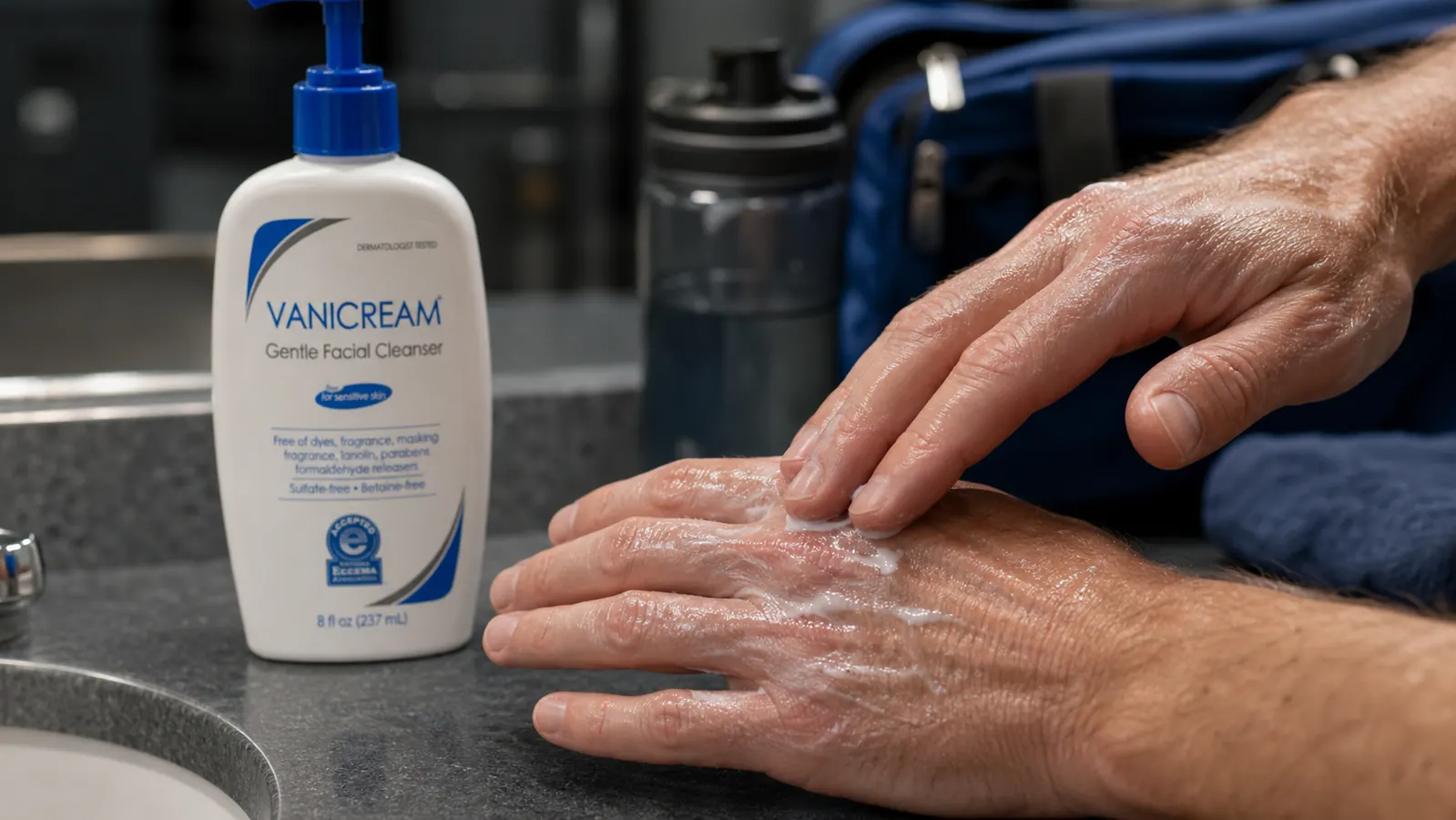
I didn't just use one bottle and call it a review. I bought two, kept one on my bathroom counter and one in my gym bag, because I wanted to know if it held up to a real double-cleanse routine after sweating through a spin class, not just a gentle nighttime wipe-down. Every morning and night for six weeks I used only this cleanser, no exceptions, no sneaking in an exfoliating pad on a bad skin day. My husband Mike, who has oilier skin than I do and zero patience for a multi-step routine, used the gym bottle for the same six weeks so I'd have a second data point that wasn't just me.
I logged two things every week: how many new breakouts showed up along my jaw and chin, and whether my face felt tight, stripped, or irritated after rinsing, on a simple yes or no basis. I wanted numbers I could actually compare to the six weeks before I started, not just a vague feeling that my skin seemed 'better.' That log is what most reviews of this cleanser skip entirely, and it's the part that actually matters if you're deciding whether to switch.
I also set a rule for myself before I started: no new skincare purchases for the full six weeks, expensive or cheap, so nothing else could get credit for whatever happened to my face. That meant no impulse buys off an Instagram ad, no backup 'just in case' products, nothing. It sounds like a small thing, but if you've ever tried to review a skincare product honestly, you know how easy it is to accidentally introduce a second variable halfway through and then not know which product actually did the work.
The Hype Everyone Repeats
Scroll through any skincare forum and you'll see the same three claims about this cleanser: it's what dermatologists actually use, it's a 'holy grail' for sensitive skin, and it's basically identical to cleansers that cost eight times as much. The dermatologist part checks out. Plenty of actual dermatologists do recommend fragrance-free, low-irritant cleansers like this one for patients with reactive or compromised skin barriers. That's not marketing spin, that's a real and common recommendation.
The 'holy grail' language is where things get slippery. A cleanser that doesn't irritate your skin is a genuinely good foundation for a routine, but it's not going to fix uneven texture, fade dark spots, or shrink pores, and I saw more than one comment thread crediting this bottle with results that almost certainly came from a retinol or a vitamin C serum used alongside it. If you're buying this expecting a visible transformation on its own, you're setting yourself up to be let down by a five dollar cleanser that was never designed to do that job.
I also want to flag a specific claim I saw repeated in at least a dozen places, that this cleanser can help manage eczema or psoriasis flare-ups. I don't have either condition myself, so I can't speak to it from personal experience, and I'd genuinely be cautious about that claim regardless. A gentle, low-irritant cleanser is a reasonable thing to use alongside a dermatologist's actual treatment plan for a diagnosed skin condition, but it isn't a treatment on its own, and no five dollar bottle should be doing that heavy lifting in anyone's routine.
What Nobody Tells You About the Texture and Smell
The texture is the number one thing people leave out of their glowing five-star reviews, and it's the thing I think you actually need to know before you order it. It doesn't foam. At all. It's a thin, almost runny lotion that you work into your skin with your fingertips, and if you're used to a gel or foaming wash that lathers up, your first reaction is going to be some version of 'wait, is this actually cleaning anything?' Mike's exact words after his first use were 'this feels like I just rubbed hand lotion on my face,' and he wasn't wrong.
It also doesn't rinse off with quite the same clean snap as a foaming cleanser. I found I needed a few extra splashes of water and a slightly longer rinse to feel like I'd gotten it all off, especially around my hairline. Once I adjusted my rinse habit it stopped being an issue, but nobody mentioned that adjustment period in any review I read before buying, and it's a real reason some people give up on this cleanser in the first week and go back to whatever foamy wash they were using before.
By week three I'd changed how I applied it without really meaning to. Instead of splashing water on my face first, I started applying the Vanicream to slightly damp skin and working it in for a full thirty seconds instead of my original rushed ten, which made the whole experience feel more deliberate and less like I was skipping a step. That small change made the no-lather texture bother me a lot less, and it's a tweak I never would have found if I'd given up in week one like I nearly did.
The Ingredient List, Without the Marketing Spin
Here's what the label actually tells you once you strip away the buzzwords. It's free of fragrance, dyes, parabens, and formaldehyde-releasing preservatives, which is the real reason it earns its reputation with people who have reactive or compromised skin barriers. It's not marketed as fragrance free with a hidden masking scent added in either, the ingredient list backs up the claim, and my nose confirmed it, this bottle genuinely smells like nothing at all.
What it doesn't have is any active ingredient meant to target acne, oil production, or texture. No salicylic acid, no benzoyl peroxide, nothing exfoliating. For someone with straightforward sensitivity, that's exactly the point. For someone specifically shopping for a cleanser to manage breakouts, that's the detail a lot of glowing reviews conveniently skip, because this cleanser was never built to do that job, and pretending otherwise sets people up for disappointment.
I also ran the actual price math, because 'cheap' only means something next to a real comparison. My old $38 cleanser worked out to roughly 68 cents per use over its typical bottle life. This one, at $5.72 for 2.5 ounces, comes out closer to 12 cents per use at the amount I actually use per wash. That's not a minor difference, that's nearly six times cheaper per application for a formula that caused noticeably less irritation across my own six-week log.
Six Weeks Later: What Actually Changed
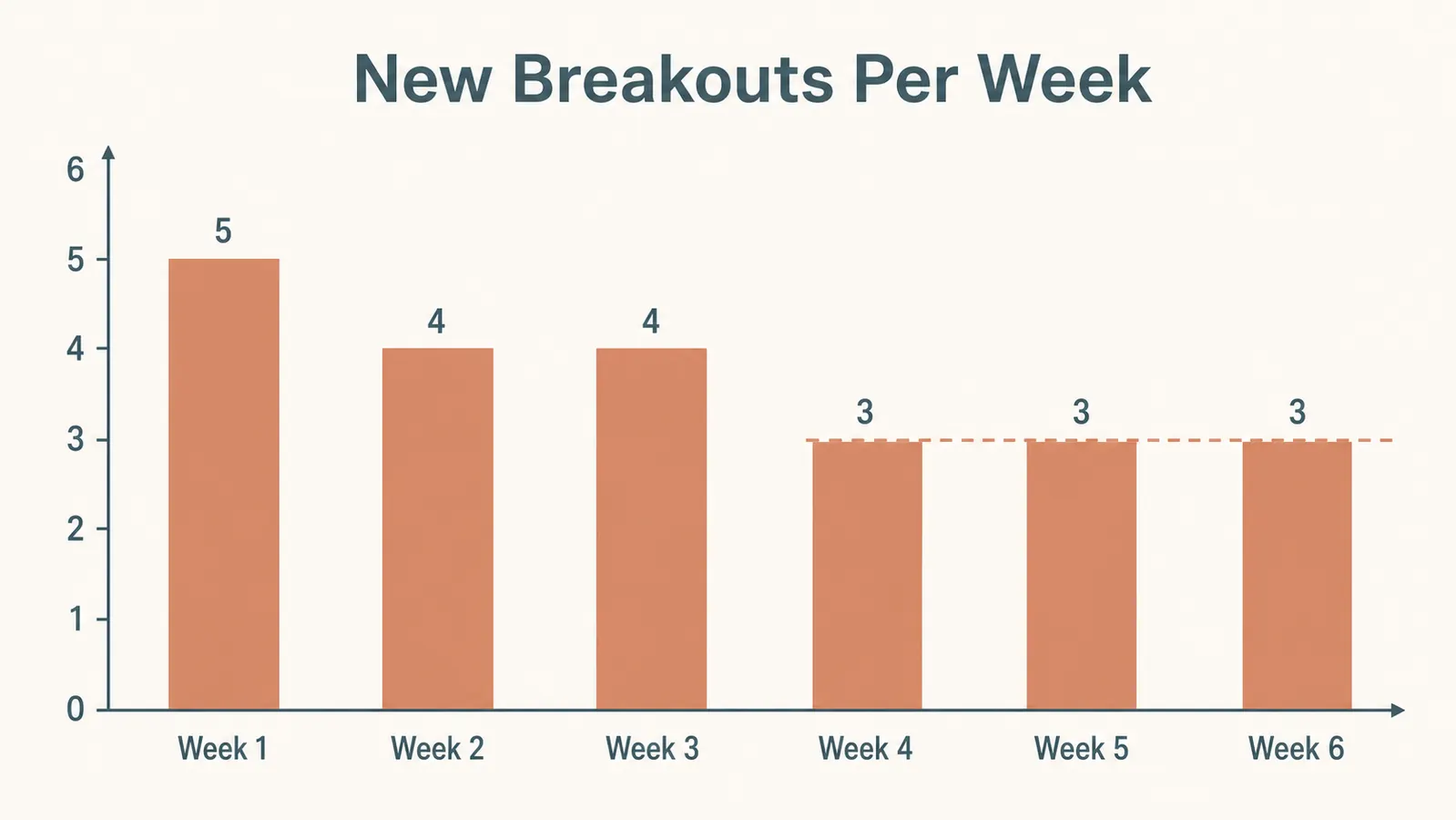
The honest answer is that my skin got calmer, not clearer. In the six weeks before I switched, my $38 cleanser left my face tight and slightly pink almost every night, and I was averaging about five new breakouts a week along my jaw. Once I switched to Vanicream, that tight, stripped feeling disappeared within the first ten days and never came back, not once across the full six weeks.
The breakout count told a more complicated story. Week one I still logged five new breakouts, basically unchanged. By week two that dropped to four, and it held at four through week three. By week four I was down to three a week, where it stayed steady through weeks five and six. That's a real improvement, roughly a forty percent drop, but it plateaued rather than kept falling, and it never got close to zero. If your breakouts are hormonal like mine, a gentler cleanser removes one source of aggravation, it doesn't override the actual underlying cause.
Mike's results were a useful contrast to mine. His skin runs oilier than mine and he's never had a reactive or sensitive-skin problem in his life, so I wasn't expecting much of a change either way for him, and that turned out to be roughly right. He didn't log any new breakouts before or during the six weeks either way, his skin simply doesn't work that way, but he did notice his face felt less 'shiny' by midday, which he chalked up to the Vanicream not stripping his skin into overproducing oil the way his old drugstore foaming wash apparently did. He's not going back to his old cleanser, which from a guy who couldn't tell you the difference between a serum and a toner, is its own kind of endorsement.
Where the Reviews Oversell It
I want to be direct about the gap between what I read before buying and what I actually experienced, because that gap is the whole reason I'm writing an honest review instead of another five-star post. This cleanser did not clear my skin. It did not replace my moisturizer's job of hydrating. It did not remove a full face of makeup either, I still needed a separate makeup remover on days I wore foundation, and skipping that step left a faint residue along my hairline more than once.
The packaging is also nothing to get excited about. It's a plain pump bottle that looks like something you'd find in a hospital supply closet, and the pump occasionally sputters air if the bottle sits unused for more than a couple of days. None of that affects how the product performs, but if part of what you enjoy about skincare is a nice bottle on your counter, this one won't scratch that itch, and I think reviews that gloss over the utilitarian packaging are doing readers a disservice. For a side-by-side against the other cleanser dermatologists mention just as often, I put together a full comparison against Cetaphil that gets into the pricing and texture differences in more detail.
I'll also say plainly that I'm keeping this cleanser in my routine past the six-week test, which is more than I can say for most of what I've tried. That's not because it changed my skin dramatically, it's because it removed a source of daily irritation without asking me to spend more or do more, and at this point that's a low bar I'm genuinely glad something finally cleared.
What I Liked
- Genuinely fragrance-free with no stinging or tightness, even after my expensive cleanser was causing both
- Cut my weekly breakout count by roughly forty percent within a month
- Held up fine to a real double-cleanse routine after sweaty workouts
- Costs a fraction of the cleansers people compare it to online
- Simple enough ingredient list that it's easy to layer other products on top of
Where It Falls Short
- Does not clear existing breakouts and has no acne-fighting ingredients
- No foaming lather, which takes real adjustment if you're used to a gel wash
- Doesn't remove a full face of makeup, you'll still need a separate remover
- Plain bottle and a pump that sputters air after sitting a few days
- Results plateaued instead of continuing to improve past week four
The internet oversold me a miracle and delivered a five dollar bottle that just stopped making things worse. Six weeks in, I've decided that's actually enough.
Who This Is For
This cleanser makes the most sense for anyone whose current wash leaves their face tight, red, or stinging, especially if you already suspect fragrance or a harsh sulfate base is the culprit. It's also a smart, low-risk pick if you're building a routine around actives like retinol or a vitamin C serum and want a cleanser gentle enough that it won't compete with what those ingredients are already asking of your skin. If your main goal is simply removing the day without adding irritation to it, this earns its reputation. It's worth reading the full story of how I actually landed on this cleanser if you want the longer version of how my routine got here.
Who Should Skip It
Skip this one if you're specifically shopping for something to treat active breakouts, since it has no acne-fighting ingredients and, as my own log shows, it plateaus rather than clears skin on its own. Skip it too if a thick, foaming lather is part of what makes a wash feel effective to you, because the thin, low-foam texture here reads as 'not working' to a lot of people even when it's doing exactly what it's supposed to. And if you wear heavy makeup daily, plan on adding a separate remover, because this cleanser alone won't fully take it off.
It Didn't Clear My Skin. It Just Stopped Making It Worse.
Sometimes that's the whole win. See today's price on the Vanicream that's now permanently in my gym bag.
Amazon Check Today's Price on Amazon →